Table of Contents
Toggle1. Raw Material Preparation
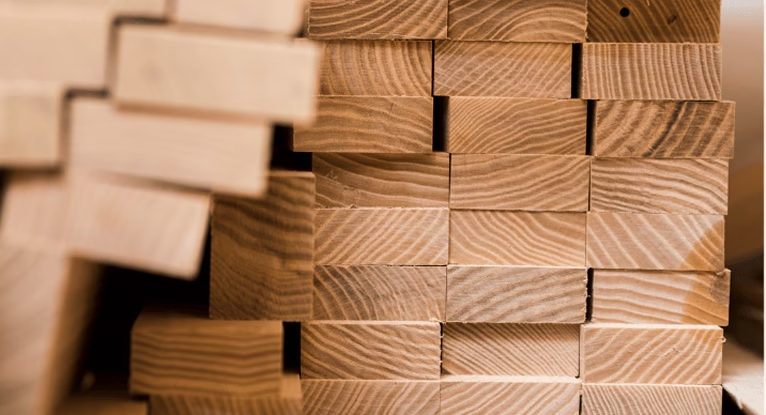
- Factories typically use wood chips, sawdust, or waste from sawmills.
- Non-wood debris (dirt, stones, metal) is removed with cleaning systems.
2. Chipping and Defibrating
- Large wood pieces are reduced to small wood chips.
- Chips are softened with steam and then passed through a refiner to break them down into wood fibers.
3. Drying
- The fibers are dried in large flash dryers using hot air until they reach the correct moisture content (usually around 8–12%).
4. Resin and Wax Application
- Dried fibers are mixed with:
- Urea-formaldehyde resin (the main binder).
- Wax or paraffin (to improve water resistance).
- Sometimes fire retardants or other additives are added.
5. Mat Forming
- Fibers are laid on a conveyor belt into a thick, fluffy mat.
- The mat is pre-pressed to remove air and make the layer uniform.
6. Hot Pressing
- The mat passes into a multi-daylight hot press.
- High pressure (30–40 kg/cm²) and heat (160–180°C) cure the resin and compress the fibers into a dense board.
- This step determines the thickness and density of the MDF.
7. Cooling & Conditioning
- The hot boards are cooled gradually to stabilize them.
- Boards are stacked for several hours to equalize internal stresses.
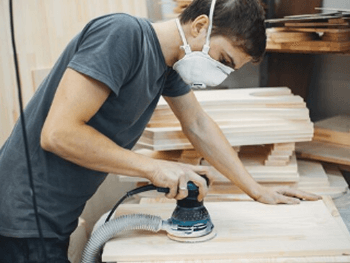
8. Trimming & Sanding
- Edges are trimmed to standard sizes (e.g., 1220 × 2440 mm).
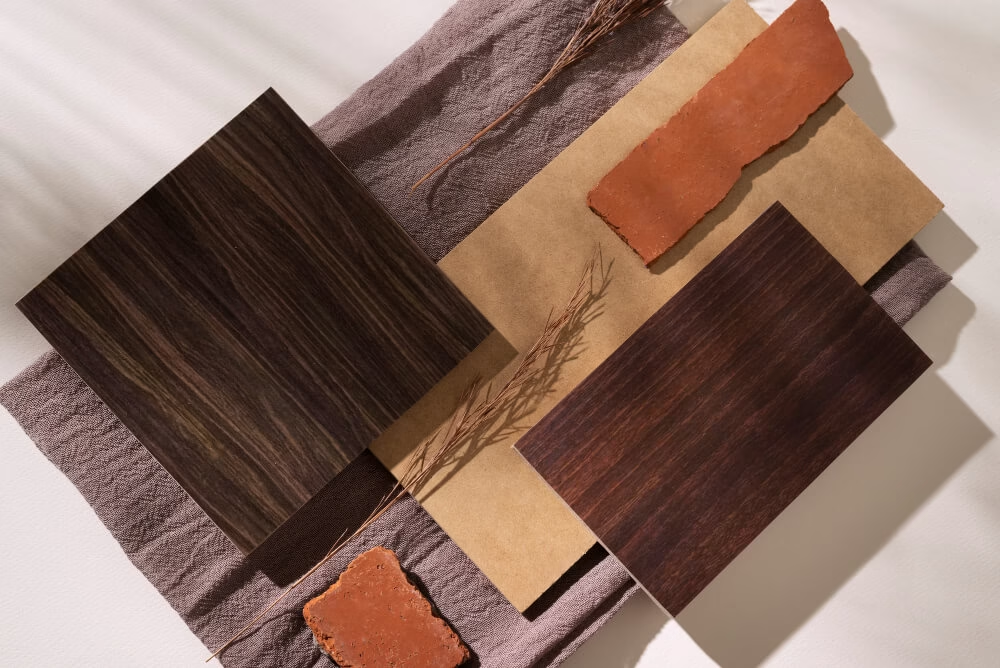
- Surfaces are sanded smooth for furniture, lamination, or painting.
9. Grading & Packaging
- Boards are graded for quality, thickness, and density.
- Bundled and packaged for shipping to furniture and construction industries.